Subscribe to The TurkEU Blog by Email

Tuesday, February 15, 2011

Turkey ‘Sledgehammer’ Plot Investigators Detain OdaTV Journalists - NYTimes.com

The Turkish prosecutor in the Ergonekon investigations has ordered the detention and raid on the homes of several journalists from the OdaTV news website. It is unclear to me what reason there could be to investigate them in connection with the probe into a 2003 coup, but OdaTV has apparently been highly critical of the AKP. An AKP spokesperson says that the party has no control over the prosecutor, but this is not the first arrest of journalists critical of the AKP.

OdaTV news
Of the many things that are going well with the Turkish reform process, respecting the freedom of the press is not one. To be continued.

Turkey ‘Sledgehammer’ Plot Investigators Detain OdaTV Journalists - NYTimes.com

Monday, February 14, 2011

My book now on Amazon with reviews

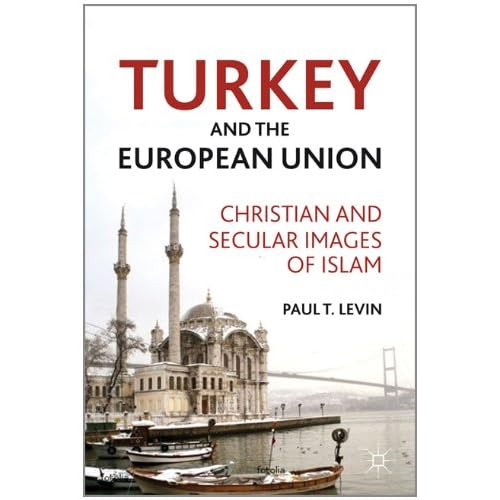
Turkey and the European Union (NY: Palgrave Macmillan) is now available for pre-order on Amazon. It will be until late June that the book itself comes out, however.

Out in June.


Early reviews:

"What do you get when a superb scholar adopts a constructivist view of history, develops a sophisticated conception of  collectivity identity, and takes on Europe’s long-running encounter with Islam?  A book I actually wanted to read from beginning to end."  --Nicholas Onuf, Professor Emeritus, Florida International University, and Professor Associado, Pontifícia Universidade Católica do Rio de Janeiro

"This fascinating volume exposes the long and troubled history of Christian, and later European, images of Muslims. Taking a narrative approach, Paul T. Levin explores the historical, social-psychological and conceptual bases for Europe’s uneasy relations with Turkey and how these historical legacies play into Turkey’s potential EU accession. This excellent book grasps wholeheartedly the changing nature of Europe’s relations with Turkey and presents a more holistic view than most other books of this kind. A true joy to read!" --Catarina Kinnvall, Professor of Political Science, Lund University and co-author of The Political Psychology of Globalization: Muslims in the West

Description
A critical examination of the origins of today’s anti-Islamic rhetoric in Europe, this book focuses specifically on representations of Turkey. Applying a novel theoretical framework that understands collective identities as dramaturgical achievements, it shows that stereotypes of Turks continue to provide an important “Other” against which a supposed European “Self” is contrasted. The book identifies two competing meta-narratives that have long vied for the right to define Christendom and later Europe, and argues that the struggle over these narratives--one tragic, the other comic--have come to a head in Turkey’s current bid for EU membership.


Friday, February 11, 2011

Council of Europe's HR Commissioner on Islamophobia

A new online magazine focused on news relating to Muslims and Islam, Globalia, has an interview with Thomas Hammarberg, Commissioner for Human Rights at the Council of Europe, in which he discusses the phenomenon of Islamophobia in Europe (full disclosure: Thomas Hammarberg and I are related).

His assessment of Islamophobia in contemporary Europe:
Thomas Hammarberg 
The problem as such is in fact very serious. Unfortunately we see signs that it is spreading. We see that it begins to affect the main course political debate in several countries. Some political parties that take on an islamophobic agenda have won support in elections in a manner which is very unfortunate. Hungary, the Netherlands and Sweden were the last examples. So I think we have to be extremely careful now and see this as a major threat against human rights and the basic european values.
In the interview, the HR Commissioner makes a general reference to "some recent ... opinion poll,... which indicated that anti-muslim feelings are widespread in Germany." He is most likely referring to the study "Die mitte in der krise" published last fall by the Friedrich Ebert Stiftung. 

Among other things, the report showed that 58.4% of Germans agree with the statement that the religious practices of Muslims in Germany ought to be severely restricted in the future. In the areas of the former DDR (East Germany), the same figure was 75,7%. You can access the report here, but it is German. The relevant figures can be found in table 4.3.8 on page 134.

In the UK, a heated debate about how bad Islamophobia really is, or if it is an appropriate label at all, has flared up over the last few weeks. This round of debate was prompted by Baroness Warsi's recent assertion that hostility towards Muslims and Islam has now passed what she called the "dinner party test." By this, the conservative party co-chairman and herself a Muslim meant that it had become socially acceptable to openly express "anti-Muslim bigotry and hatred."

The controversy notwithstanding, Lady Warsi's statement is, unfortunately, capturing a real-world phenomena that is hard to deny. And as the HR Commissioner points out, it is not just present in Germany or the UK, but across much of Europe (and also the United States). 

About the U.S. by the way. This blog - which partly focuses on and is critical of the phenomenon of Islamophobia - is soon set to reach a thousand hits. A cause for celebration for sure. But it is depressing to compare these numbers to a rabid Islamophobic blog like Pamela Geller's Atlas Shrugs, which according to Wikipedia has posted videos suggesting that Muslims have sex with goats and describes Islam as "the most antisemitic, genocidal ideology in the world." Atlas Shrugs allegedly receives about one million hits per month...

Thursday, February 10, 2011

The overblown threat from 'Islamic terrorism' | Stephen M. Walt

Harvard IR Professor Stephen M. Walt has an entry on the Foreign Policy blog about EU's 2010 Terrorism situation and trend report. Walt:
Remember the avalanche of Muslim-based terrorism that was about to descend upon the West? Well, according to the EU's 2010 Terrorism Situation and Trend Report, the total number of terrorist incidents in Europe declined in 2009. Even more important, the overwhelming majority of these incidents had nothing whatsoever to do with Islam.
More precisely, there were 294 terrorist attacks in EU member states during 2009. Of those, one (1) was classified as "Islamist": an attack against a military target in Italy. (The figures do not include 124 attacks on Northern Ireland, none of which would classify as Islamist.) Here's the relevant table that lists all EU countries that had reported attacks:

From EUROPOL's 2010 Terrorism Situation and trend report, p. 12.

As can be seen clearly from the table, separatist ethno-national terrorism remains the most threatening form of political violence aimed at the state, society, or international organizations located within the EU. Most of this violence is focused on France (Corsican and Basque separatists) and Spain (Basque separatists). 

The report notes that the total number of attacks constitute a 33% drop from the year before and "is almost half the number of attacks carried out in 2007."

Monday, February 7, 2011

Egemen Bağış's decidedly unhelpful remarks

It's election season in Turkey, and it is perhaps this we see in some recent statements by leaders from the ruling Justice and Development Party (AKP). Their rhetoric on the stalled EU negotiations has been turned up quite a few notches. I have previously commented on Prime Minister Erdoğan's feisty Op. Ed. in Newsweek as well as his deputy Ali Babacan's warning that the EU is turning into a Christian club.

The location of Mr. Bağış's speech: Auschwitz.
The most recent addition to the AKP chorus of frustration is a speech by Turkey's EU minister and top negotiator, Egemen Bağış, given during a commemorative visit to Auschwitz last week. Bağış took the occasion to expand on his colleagues’ criticism against what they perceive as the increasingly parochial attitudes within several EU countries toward enlargement and their respective Turkish minorities.

One can think of few better places to raise the topic of the dangers of European parochialism, and the EU minister went on to emphasize the important point that
we cannot tolerate anti-Semitism and racism in any form.
Unfortunately, Mr. Bağış did not end his remarks there, but went on to offer an analysis of the growing presence of racism in today's Europe by reference to the continent's dark past:
It is unfortunate that the EU, founded in order to eliminate the threats of that period to peace, is today under the risk of conquest by a racist mentality that cannot internalize its own values and emulates the fascist methods of 1930s.

Friday, February 4, 2011

Thursday, February 3, 2011

Elizabeth Shakman Hurd on the Myths of Mubarak

I want to post a link to Elizabeth Shakman Hurd's recent post about Western interpretations of the past and current political situation in Egypt, on The Immanent Frame blog. It is slightly off the topic that I typically dwell upon here (Turkey and the EU), but much like my own work, Shakman Hurd's piece deals with constricting Western narratives of Islam that juxtapose secular/modern/stable with Islamic/radical/fundamentalist. Her analysis is insightful and the EU's current inability to deal with the Turkish membership bid in a thoughtful and productive manner must, I believe (with her), be seen in precisely that wider context.

Perhaps most of all, I enjoyed the quote by Michel Foucault, who at the time of the Iranian revolution remarked that:
the problem of Islam as a political force is an essential one for our time and for years to come, and we cannot approach it with a modicum of intelligence if we start out from a position of hatred.
In many ways, this distills my own position and the main problem that I have with much of the EU discourse on e.g. human rights or the situation of Kurds in Turkey. While much of the critique that is routinely (ritually, we might even say) leveled against Turkey in the European Parliament may be well-founded, the broad tenure of the discourse is so infused with fear, distrust, and even prejudice, as well as a rather smug sense of superiority, that it not only poisons the climate of negotiations but also obscures the actual issues under consideration and prevents what could be a more authoritative and ultimately more influential treatment of said issues.

Myths of Mubarak « The Immanent Frame

Tuesday, February 1, 2011

Turkey tells Mubarak to listen to the people | Reuters

Just in: Erdogan today (Tuesday) gave a speech that was broadcast live in parts of the Arab world, in which he urged Mubarak to "listen to the shouting of the
people" and to "satisfy people's desire for change."

Ping your podcast