Subscribe to The TurkEU Blog by Email

Friday, March 11, 2011

The 2011 McCarthy hearings begin

It is not just Europe that is experiencing a wave of Islamophobia. Far-right conservative activists in the United States have become increasingly ardent in recent years and months. The NYT has a good profile of one of them, Brigitte Gabriel, the founder of the anti-Islamic ACT!, who according to the NYT warns that
America has been infiltrated on all levels by radicals who wish to harm America ... They have infiltrated us at the C.I.A., at the F.B.I., at the Pentagon, at the State Department.
And, one should add, apparently also the Conservative Political Action Committee itself, where - the horror - a Muslim is actually a member of the board! And where another famous Reagan-era conservative icon and CPAC board member - Grover Nordquist - has gone and married a (dare I say it?) Muslim. It's almost as if the United States Constitution allowed members of different faiths to be politically active. Surely something must be done about this situation.

Other prominent anti-Islam activists who are doing their best to remedy this dreadful state of affairs - in which individuals are not persecuted and prohibited from a public role due to their faith - include Pamela Geller, who has been leading the charge against the proposed Cordoba Center on Manhattan, and Frank Gaffney, president of the Center for Security Policy.

And yesterday was the opening day of Rep. Peter King's "Congressional Hearings on the Radicalization of American Muslims." King, himself a long- time supporter of the terrorist organization known as the IRA - has been concerned that mainstream Muslim organizations do not cooperate with authorities in defeating terrorists. Perhaps the best response in the face of such impressive lack of self-reflection or concern about internal logical consistency is satire, so I am attaching a Daily Show clip below that does that better than I can.

UPDATE: Just saw yesterday's even better Daily Show clips on the Peter King hearings, so I'm attaching those instead. (You can see the old clip here.)

The Daily Show With Jon StewartMon - Thurs 11p / 10c
Radical Muslim Hearings
www.thedailyshow.com
Daily Show Full EpisodesPolitical Humor & Satire BlogThe Daily Show on Facebook

And the brilliant commentary by John Oliver:

The Daily Show With Jon StewartMon - Thurs 11p / 10c
Radical Muslim Hearings - IRA Terrorism
www.thedailyshow.com
Daily Show Full EpisodesPolitical Humor & Satire BlogThe Daily Show on Facebook

Thursday, March 10, 2011

Turkish media wars: part III

Back from a lull in posting caused by an overdose of work.

While I've been busy doing other things, the Turkish "media wars" have raged on. On March 3rd, EU Commissioner for Enlargement, Štefan Füle, issued a strongly worded comment on the recent arrests of Turkish journalists. According to EurActiv, Füle's statement notes that
Štefan Füle, Wikipedia Commons
The European Commission is following with concern the recent police actions against journalists, including the detention today of Nedim Şener, Ahmet Şık and others and the arrests last week of ODA TV site administrators Soner Yalçın, Barış Terkoğlu and Barış Pehlivan.
And the European Parliament yesterday passed a highly critical statement on Turkey, the most critical document to come from the EP since the opening of negotiations in 2005, according to the Turkish opposition party CHP's Brussels representative. The Turkish foreign ministry criticized the document for being "one-sided, unacceptable and irrelevant to reality" and even the CHP's Brussels chief described it as a poor analysis of events in Turkey. The document was passed as part of the EP's consideration of the Commission's 2010 Progress Report from November of last year. (The Progress Report can be accessed here, and the text adopted by the EP is available here.)

But the EU is not the only actor critical of the Ergonekon probe-related media arrests. The Wall Street Journal reports that even the Turkish President, Abdullah Gül, has expressed "concern" over the arrests, stating that they constitute "developments that the public conscience cannot accept."

In an independent development but adding insult to the injury caused to Turkish media by the Ergonekon investigation, my Turkish readers may soon no longer be able to access this blog since a court in Diyarbakır (a city in Southeast Turkey) has decided that Blogger should be blocked in Turkey. Le Monde reports that the decision comes after a petition by the Turkish media group Digiturk. Apparently, some Blogger pages transmit material - in particular football matches - that infringe on copyright and intellectual property rights.

Fair enough, but shutting down the entire Blogger platform due to the unwarranted activities of a few of its users is draconian and entirely disproportionate. A free media (and blogs are included in this category) is as important to a vibrant democracy as oxygen is to human life, and you wouldn't outlaw air because of a few polluters! (OK, I welcome better analogies in the comments section...)

http://www.euractiv.com/en/enlargement/le-slams-turkey-media-freedom-news-502752?utm_source=EurActiv+Newsletter&utm_campaign=a821c3788c-my_google_analytics_key&utm_medium=email

Thursday, March 3, 2011

Turkey and Europe: Mr Erdoğan goes to Germany | The Economist

From today's Economist:
IT IS no secret that Turkey's efforts to join the European Union have not been going well. But a bout of Europe-bashing this week by Turkey’s mildly Islamist prime minister, Recep Tayyip Erdoğan, has exposed just how rotten relations have become since the EU formally began membership talks with Turkey in 2004. All the more so because Mr Erdoğan made his comments in Germany, where he was meant to be shoring up Turkey’s case. If anything his visit has had the opposite effect.

Turkey and Europe: Mr Erdoğan goes to Germany | The Economist

Friday, February 25, 2011

Why I wanted a misleading image on the book cover

I just got the new, revised cover image for my forthcoming book. Someone who knows Istanbul well and is familiar with the Ortaköy Mosque on the picture and how it is actually located in relation to the Bosphorus Bridge (Boğaziçi Köprüsü) in the background may be confounded. With good reason. The image is distorted.

So why would I want a misleading image on the cover? Here's an excerpt from the introduction:

The image on the cover of this book — what appears to be a mosque on the eastern shores of the Strait and a bridge leading west, to a Europe only faintly visible in the distance — suggests a simple geographic, cultural, and religious demarcation between Turkey on one shore and Europe on the other. It is, however, an illusion. The image is reversed: it is a mirror image. The Ortaköy Mosque in the foreground is actually located on the western, “European” shore and the bridge leads to the Asian side of the Strait. Looking closer at the mosque, the simplistic demarcation between an eastern, Muslim Turkey and a western, Christian (or secular) Europe is complicated further still, for the Ortaköy Mosque is one of the finest examples of baroque architecture in Istanbul. It was constructed in 1853 by the Paris-educated Armenian architect Nigoğayos Balyan per the request of

Thursday, February 24, 2011

Finally, Turkey Looks East - NYTimes.com

The NYT has a lovely op-ed piece by Turkish writer Elif Şafak, in which she reflects on Turkey's new-found role as a model and on what it means to fuse East and West, democracy and Islam in a secular state. Below are some short excerpts but I recommend reading the original.

In Şafak's view, Turkey is not, as it is sometimes claimed by outsiders in the West, in thrall to political Islam. As she puts it:
Turkey defies clichés. Turkish society is a debating society, with some people passionately in favor of the governing Justice and Development Party and some passionately against it. At a recent event I heard an academic applaud the government for curtailing the power of the military, while a journalist criticized it for conducting groundless trials against army officers and restricting the press.
I couldn't agree more with her when she laments that "it is this complexity that outsiders fail to recognize..." If nothing else, this puts a charitable spin on my own confusion here on this blog (painfully evident in my previous post).
A society with a multiethnic, multilingual, multireligious empire under its belt and 80 years of experience as a constitutional republic, Turkey has managed to create its own passage to democracy, however flawed.
She concludes with a quote from a 20th century "Turkish novelist, literary critic and poet named Ahmet Hamdi Tanpinar," who
was probing the way Turkey straddled an uneasy gap between East and West. “Our most important question is where and how we are going to connect with our past,” he wrote. In other words, how could we blend Islamic and Eastern elements with a modern, democratic, secular regime?
His question is as vital today as it was yesterday — for Egypt, Tunisia and many other countries in the Arab world — but Turkey has already provided many answers.
Finally, Turkey Looks East - NYTimes.com

Here is Elif's most recent books, in case anone is interested:

Wednesday, February 23, 2011

Turkish media wars: part II

On Thursday last week I reported on remarks made by the US ambassador to Turkey, Francis J. Ricciardione, regarding the detainment of three journalists with ties to a news website critical of AKP: OdaTV. Well, the excitement continues. Friday, Prime Minister Erdoğan returned fire, criticizing the ambassador in his usual blunt style. The New York Times' Sebnem Arsu quotes from the PM's remarks:
"Unfortunately, some outsiders snooping into things that are not their business believe in this fuss and make comments,” he said in a speech broadcast to governing party members. “First stop and research, ask what it is all about, what the judiciary will be doing, ruling for what, learn all of this. This is called amateur diplomacy.”
But Ambassador Ricciardone has backing from home:
A State Department spokesman, Philip J. Crowley, said Wednesday that Washington stood by the ambassador’s remarks and that it would be watching the journalists’ case very closely. “We do have broad concerns about trends involving intimidation of journalists in Turkey,” Mr. Crowley said.
Mr. Erdogan and the AKP leadership thus point to the independence of the judiciary as evidence that they could not be behind the arrests. This argument should not be dismissed out of hand - it was only recently that the AKP itself was subject to a failed attempt by the Constitutional Court to shut the party down. But a more reasonable assumption is that the judiciary's independence from the party in power de facto varies. It is hard to avoid the suspicion that the interests of the particular prosecutor in the Ergonekon case, Zekeriya Öz, is closely aligned with those of the AKP.

One issue that I did not mention in my post on Thursday but which poses an interesting backdrop for the arrests is the fact that one of the three detained - the owner of OdaTV, Soner Yalçın - is also a columnist for the Hürriyet newspaper, which is the flagship publication of the dominant Doğan media group (Doğan Yayın Holding) and generally critical of the AKP. Doğan is one of the largest conglomerates in Turkey and owns three of the nation's leading newspapers: besides Hürriyet, Doğan also owns Milliyet, a newspaper further to the right and Radikal, a left-liberal newspaper, neither of which toes an AKP party line. The Doğan media group has been the target of a government campaign that includes the imposition of a fine amounting to some 4.8 million

Friday, February 18, 2011

Video of Kurdish riots in SE Turkey

Reuters has published video footage from the clashes between Kurdish demonstrators and police in several provinces. The video shows demonstrators throwing molotov cocktails on armored police vehicles, and police deploying water cannons and tear gas to disperse demonstrators.


Hürriyet Daily News reports that protests occurred in 12 provinces, including Diyarbakır, Şanlıurfa, Şırnak and Mardin, the southern provinces of Mersin and Antalya, as well as in Istanbul. There are no reports of injuries but 30 protestors were detained, according to the Daily News.

The protests come at the anniversary of the capture of PKK leader Abdullah Öcalan's capture in Kenya on February 15, 1999. (BTW, the voice-over in the video calls him "Abdullah Atalan"... Reuters really ought to get the name of someone that important to their story right.) But the rioters are in all likelihood also inspired by the wide-spread protests in North Africa and the Middle East. The question is if this changed regional context will spell the beginning of more lengthy Kurdish protests across the country.

Tuesday, February 15, 2011

Turkey ‘Sledgehammer’ Plot Investigators Detain OdaTV Journalists - NYTimes.com

The Turkish prosecutor in the Ergonekon investigations has ordered the detention and raid on the homes of several journalists from the OdaTV news website. It is unclear to me what reason there could be to investigate them in connection with the probe into a 2003 coup, but OdaTV has apparently been highly critical of the AKP. An AKP spokesperson says that the party has no control over the prosecutor, but this is not the first arrest of journalists critical of the AKP.

OdaTV news
Of the many things that are going well with the Turkish reform process, respecting the freedom of the press is not one. To be continued.

Turkey ‘Sledgehammer’ Plot Investigators Detain OdaTV Journalists - NYTimes.com

Monday, February 14, 2011

My book now on Amazon with reviews

Turkey and the European Union (NY: Palgrave Macmillan) is now available for pre-order on Amazon. It will be until late June that the book itself comes out, however.
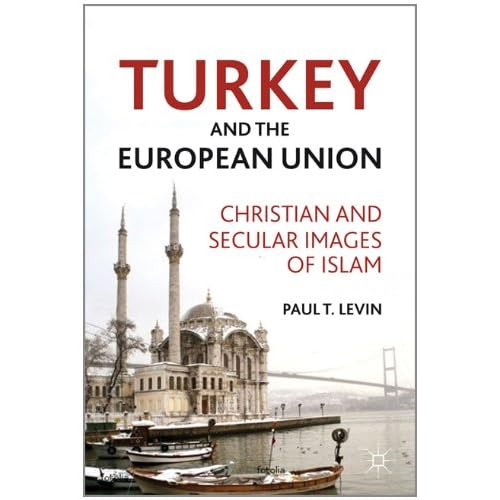
Out in June.


Early reviews:

"What do you get when a superb scholar adopts a constructivist view of history, develops a sophisticated conception of  collectivity identity, and takes on Europe’s long-running encounter with Islam?  A book I actually wanted to read from beginning to end."  --Nicholas Onuf, Professor Emeritus, Florida International University, and Professor Associado, Pontifícia Universidade Católica do Rio de Janeiro

"This fascinating volume exposes the long and troubled history of Christian, and later European, images of Muslims. Taking a narrative approach, Paul T. Levin explores the historical, social-psychological and conceptual bases for Europe’s uneasy relations with Turkey and how these historical legacies play into Turkey’s potential EU accession. This excellent book grasps wholeheartedly the changing nature of Europe’s relations with Turkey and presents a more holistic view than most other books of this kind. A true joy to read!" --Catarina Kinnvall, Professor of Political Science, Lund University and co-author of The Political Psychology of Globalization: Muslims in the West

Description
A critical examination of the origins of today’s anti-Islamic rhetoric in Europe, this book focuses specifically on representations of Turkey. Applying a novel theoretical framework that understands collective identities as dramaturgical achievements, it shows that stereotypes of Turks continue to provide an important “Other” against which a supposed European “Self” is contrasted. The book identifies two competing meta-narratives that have long vied for the right to define Christendom and later Europe, and argues that the struggle over these narratives--one tragic, the other comic--have come to a head in Turkey’s current bid for EU membership.


Ping your podcast